How to Price Your Custom GPT Access: The Complete Pricing Guide
Learn proven pricing strategies for Custom GPTs. From value-based pricing to tiered models, discover how creators charge $50-$1,000+ per GPT access with 95%+ margins.


How to Price Your Custom GPT Access: The Complete Pricing Guide
Direct Answer: Price your Custom GPT based on the value it delivers, not the time you spent building it. Most successful creators charge between USD 50-USD 500 for business-focused GPTs that solve expensive problems. Start by identifying what your GPT replaces (consultant time, software subscriptions, manual work) and price at 10-20% of that value. With infrastructure costs as low as USD 5 per access code, you keep 90-99% margins.
Why Most Creators Underprice Their GPTs


The biggest pricing mistake? Thinking like a developer instead of a business owner.
You spent 20 hours building your Custom GPT. You think, "Maybe I should charge USD 50 because that's USD 2.50 per hour of my time." Wrong framework entirely.
Here's the shift: your customer doesn't care how long it took you. They care about what problem you solve and how much that problem costs them.
A GPT that writes cold emails for salespeople doesn't compete with your hourly rate. It competes with:
- A copywriter charging USD 500 per batch of emails
- A sales consultant at USD 200/hour
- The salesperson's own time (worth USD 100+/hour to their employer)
If your GPT saves them 5 hours per week, that's USD 500+ in value weekly. Suddenly, USD 200 for permanent access looks like a bargain.
The Value-Based Pricing Framework
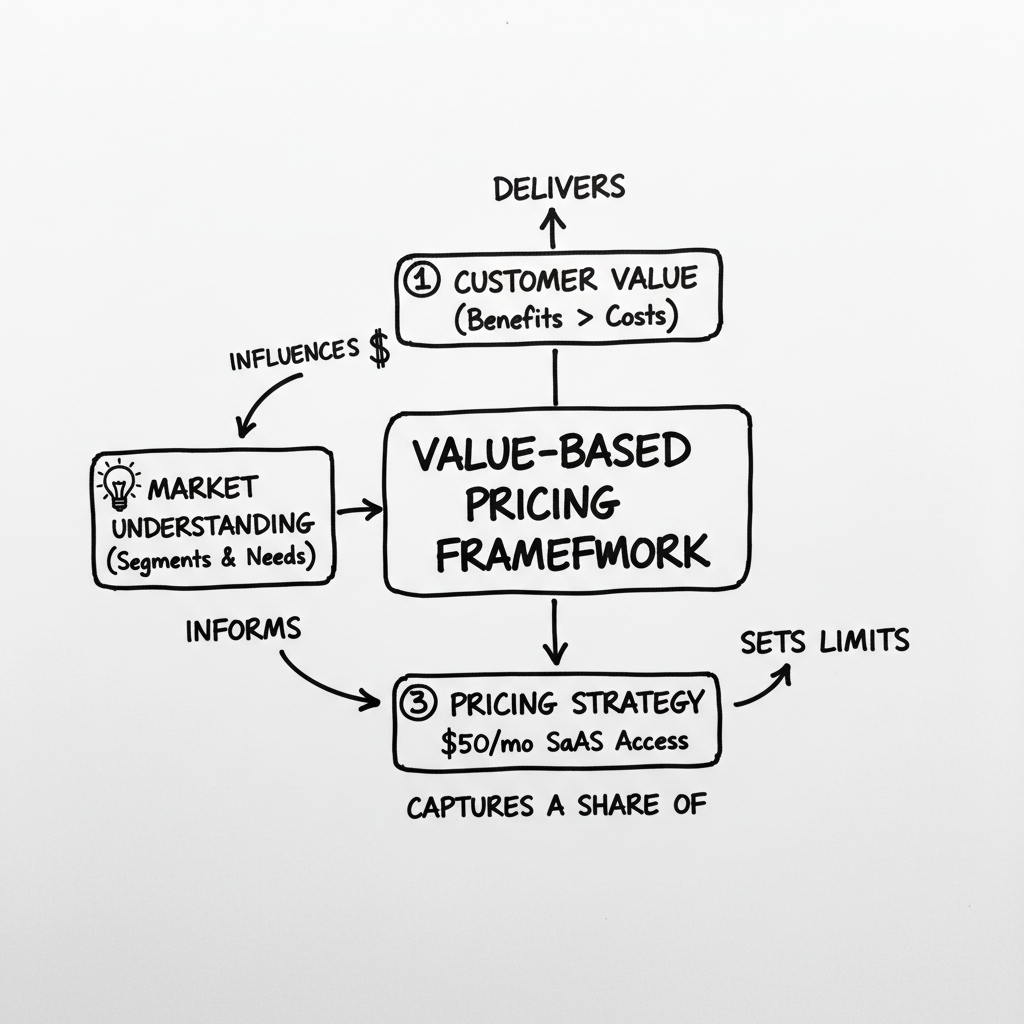
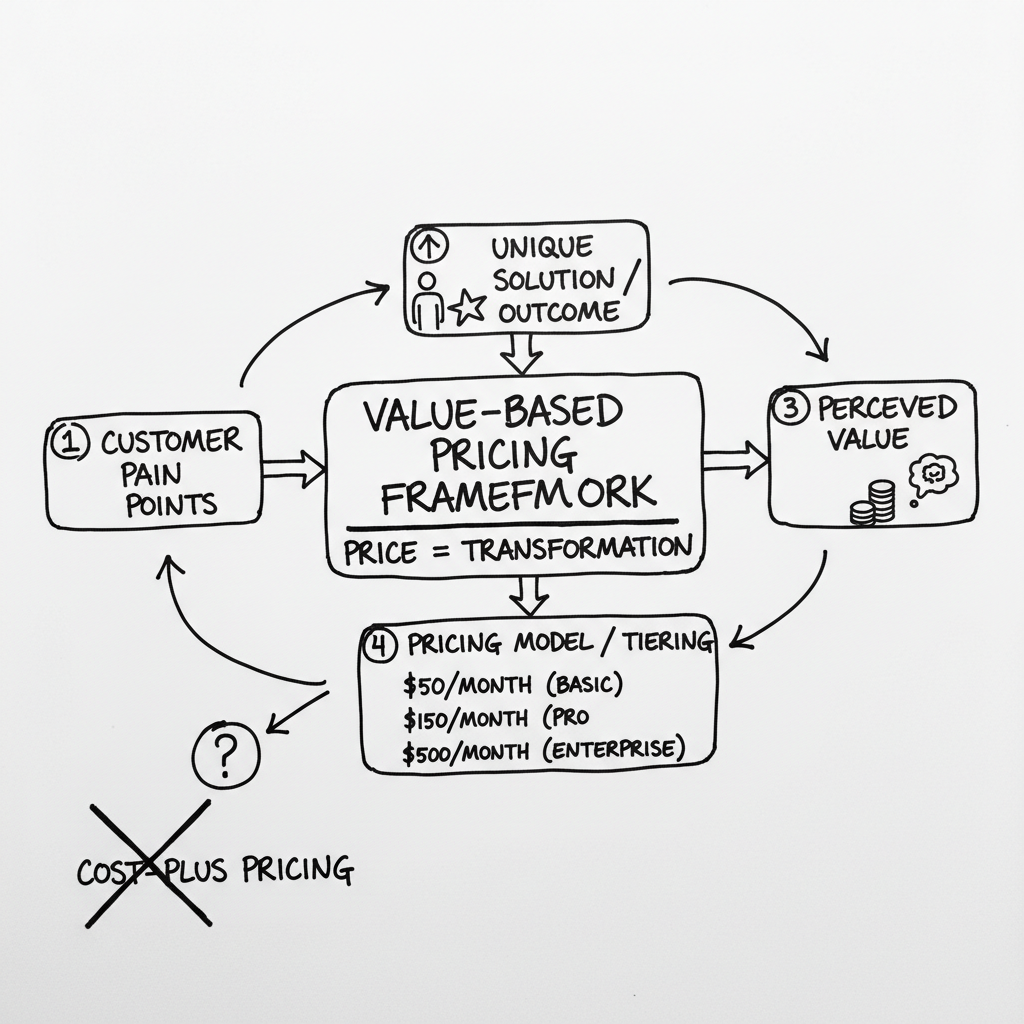
Stop pricing based on cost. Start pricing based on transformation.
Step 1: Identify the expensive problem your GPT solves
What does your target customer currently pay to solve this problem? Options include:
- Hiring a consultant or freelancer
- Subscribing to software
- Spending their own time (calculate their hourly rate)
- Living with the problem (lost revenue, inefficiency)
Step 2: Calculate the replacement value
If a business consultant charges USD 150/hour and your GPT replaces 10 hours of consulting per month, that's USD 1,500/month in value. Your GPT could reasonably charge USD 150-300/month (10-20% of value) and still be an incredible deal.
Step 3: Price at 10-20% of value delivered
This is the sweet spot. Customers feel they're getting a bargain (10-20x return on investment), and you capture real revenue for the value you've created.
Pricing Tiers That Actually Work


Different customers have different needs. Tiered pricing lets you capture value at every level.
Tier 1: Entry Level (USD 25-75)
- Basic GPT access
- Limited to specific use case
- Self-service support (documentation only)
- Best for: Individual users, hobbyists, tire-kickers
Tier 2: Professional (USD 100-300)
- Full GPT access
- Priority support via email
- Access to updates and improvements
- Best for: Freelancers, small businesses, serious users
Tier 3: Enterprise (USD 500-1,000+)
- Full access with white-label options
- Direct support (Slack channel or calls)
- Custom modifications or training
- Best for: Agencies, larger businesses, teams
The key insight from successful GPT creators: most revenue comes from Tier 2 and Tier 3. Don't optimize for volume at Tier 1. Optimize for customers who value the solution enough to pay professional rates.
One-Time vs. Subscription: Which Model Wins?
Both models work. The right choice depends on your GPT and your goals.
One-Time Access Works When:
- Your GPT solves a specific, bounded problem
- The methodology doesn't change frequently
- You want passive income without ongoing obligations
- Your customers prefer ownership over subscriptions
Subscription Works When:
- You continuously improve the GPT
- The value compounds over time (like a personal assistant)
- You want predictable recurring revenue
- Your customers use it frequently and consistently
Hybrid Approach: Many creators use one-time access for the core GPT but offer a subscription for ongoing support, updates, and community access. This captures both customer types.
With TheGPTShop's access code model, one-time pricing becomes simple. Buy codes for USD 5 each, sell access for USD 100+, keep 95% margins. No complex subscription billing infrastructure required.
The Psychology of GPT Pricing
To Marketing Your Custom GPT: From Zero to Paying Customers, see our Marketing Your Custom GPT: From Zero to Paying Customers.
To Marketing Your Custom GPT: From Zero to Paying Customers, see our Marketing Your Custom GPT: From Zero to Paying Customers.
Pricing is as much psychology as math. These principles separate amateurs from professionals.
Principle 1: Anchor High, Then Justify
When presenting your price, show the value first. "This GPT replaces USD 2,000/month in consulting fees. Access is USD 200 one-time." The anchor (USD 2,000) makes USD 200 feel reasonable.
Principle 2: Specificity Signals Value
"USD 197" feels more considered than "USD 200". Specific numbers suggest you calculated the value precisely. Use USD 47, USD 97, USD 197, USD 297 instead of round numbers.
Principle 3: Remove the Risk
Offer a guarantee. "If this doesn't save you 5 hours in your first week, I'll refund your access." Guarantees increase conversions dramatically because they shift risk from buyer to seller.
Principle 4: Create Urgency (Authentically)
Limited early-bird pricing, bonuses for first 50 customers, or genuine capacity limits create urgency. But only if they're real. Fake urgency destroys trust.
How to Test Your Pricing
To Building Custom GPTs: The Complete Technical Guide, see our Building Custom GPTs: The Complete Technical Guide.
To Building Custom GPTs: The Complete Technical Guide, see our Building Custom GPTs: The Complete Technical Guide.
Don't guess. Test.
Method 1: Ask Beta Users Directly
Before launch, give 10-20 users free access. After they've used it, ask:
- Would you pay for this?
- What would you pay?
- What would make it worth twice that price?
Take their answers and price 20-30% below the average. If they say USD 100, price at USD 70-80.
Method 2: A/B Test Price Points
Run identical marketing to two audiences with different prices. Measure:
- Conversion rate at each price
- Revenue per visitor (price x conversion rate)
- Customer quality (support tickets, refund requests)
Sometimes higher prices generate more revenue despite lower conversion rates.
Method 3: Start High, Discount Strategically
Launch at your target price. If conversions are too low, introduce a "limited time discount" rather than permanently lowering the price. This preserves value perception.
Pricing Examples by GPT Category
Real-world pricing that works:
Business/Productivity GPTs
- Cold Email Writer: USD 97-197 one-time
- Business Plan Generator: USD 147-297 one-time
- Contract Review Assistant: USD 197-497 one-time
- Investor Pitch Deck Creator: USD 197-397 one-time
Creative/Content GPTs
- Brand Voice Writer: USD 97-197 one-time
- Social Media Content Generator: USD 47-97/month subscription
- Video Script Writer: USD 97-147 one-time
- Blog Post Optimizer: USD 67-127 one-time
Technical/Specialized GPTs
- Code Review Assistant: USD 147-297 one-time
- Data Analysis Helper: USD 197-397 one-time
- Legal Document Drafter: USD 297-597 one-time
- Financial Model Builder: USD 247-497 one-time
Personal/Lifestyle GPTs
- Fitness Coach GPT: USD 27-67 one-time or USD 9-19/month
- Meal Planning Assistant: USD 27-47 one-time
- Travel Itinerary Builder: USD 37-77 one-time
The pattern: GPTs that solve expensive business problems command premium prices. GPTs for personal use price lower but can scale to higher volume.
The Infrastructure Cost Reality
Understanding your costs helps you price confidently.
With TheGPTShop's access code model:
- Single code: USD 5
- 10-pack: USD 45 (USD 4.50 each)
- 50-pack: USD 200 (USD 4.00 each)
Example Economics:
- You sell GPT access for USD 150
- Your code cost: USD 4.50 (buying 10-packs)
- Your profit per sale: USD 145.50
- Margin: 97%
Compare this to platforms like Gumroad (10% fee on USD 150 = USD 15 lost per sale) or building your own payment system (weeks of development time). Access codes give you maximum margin with minimum complexity.
Common Pricing Mistakes to Avoid
Mistake 1: Racing to the Bottom
Seeing competitors at USD 20 doesn't mean you should price at USD 15. Compete on value, not price. Better positioning beats cheaper pricing.
Mistake 2: Undervaluing Your Methodology
Your GPT includes your unique methodology. That intellectual property has value beyond the raw ChatGPT interaction. Price for the system, not just the tool.
Mistake 3: Ignoring Your Costs (Including Time)
Free support, updates, and customer success all cost you time. Build these into your price or you'll burn out serving customers at a loss.
Mistake 4: One Price for All Customers
A solo freelancer and a 50-person agency get different value from the same GPT. Tiered pricing captures this difference.
Frequently Asked Questions
What's the minimum I should charge for a Custom GPT?
For business GPTs, never charge less than USD 47-50 for one-time access. Lower prices attract bargain-hunters who generate more support requests and refund demands. Price communicates value. If you're solving a real business problem, your GPT is worth at least USD 50.
How do I justify premium pricing to customers?
Show the math. "This GPT saves you 5 hours per week. At USD 50/hour, that's USD 250/week or USD 1,000/month in time savings. One-time access is USD 197. You'll recoup that in less than a week." Concrete numbers beat vague value claims.
Should I offer discounts or promotions?
Yes, strategically. Launch discounts (20-30% off for early adopters) create urgency and gather testimonials. Avoid permanent discounts that train customers to wait for sales. Never discount more than 40% or you devalue your offering.
How do I handle price objections?
Don't lower your price. Instead, increase perceived value. Add a bonus, extend your guarantee, or offer a payment plan. If someone objects to USD 197, offering USD 150 teaches them your prices are negotiable. Offering a 30-day money-back guarantee addresses their real concern (risk) without devaluing your product.
Can I raise prices after launch?
Yes. Grandfather existing customers at their original price to maintain trust. New customers pay the new price. This rewards early adopters and creates urgency for future launches. Many creators raise prices 20-30% every 6-12 months as they add features and gather testimonials.
How do tiered pricing and access codes work together?
Create separate GPTs (or GPT variations) for each tier. Each tier gets its own set of access codes. Basic tier customers get codes to Basic GPT. Premium customers get codes to Premium GPT. Simple, scalable, secure.
What if my GPT is in a competitive market with low prices?
Differentiate on methodology, not price. If competitors sell "email writer GPTs" for USD 20, sell a "B2B SaaS Cold Email System" for USD 147 that includes your proven framework, templates, and approach. Specificity commands premium prices.
To learn more about custom gpt monetization, see our Custom GPT Monetization: 6 Revenue Models That Actually Work.
Start Testing Your Pricing Today
To learn more about custom gpt monetization, see our Custom GPT Monetization: 6 Revenue Models That Actually Work.
Pricing isn't a one-time decision. It's an ongoing experiment.
This week:
- Calculate the value your GPT delivers (cost savings, time savings, revenue generation)
- Set your initial price at 10-15% of that value
- Find 10 beta users and ask them the three pricing questions
- Adjust based on feedback and launch
Your infrastructure: Visit TheGPTShop to get your access codes. Start with a 10-pack (USD 45) to test your pricing with real customers. When you validate demand, scale to 50-packs for maximum margin.
The creators making real money from Custom GPTs aren't competing on price. They're competing on the value of their methodology, the specificity of their solution, and the transformation they deliver.
Price for transformation. Your customers will thank you.
Related Articles:


