GPT Access Control: How to Sell Custom GPTs Without Getting Copied
Protect your Custom GPT from unauthorized copying and sharing. Learn the only access control method that actually works: single-use access codes with server-side validation.


Last updated: January 4, 2026
The biggest fear for Custom GPT creators: spending weeks building a valuable GPT, only to have one customer share the link with everyone for free. Without proper access control, that's exactly what happens. Public GPT links are shareable. Public GPTs get copied. And creators who don't solve this problem earn nothing.
The good news: access control for Custom GPTs isn't complicated. The bad news: most creators use methods that don't actually work. This guide covers the only access control approach that prevents unauthorized access while enabling legitimate monetization.
For broader monetization strategies, see our Custom GPT monetization models guide. For pricing guidance, explore How to Price Your Custom GPT Access.
Why Access Control Matters

To Building Custom GPTs: The Complete Technical Guide, see our Building Custom GPTs: The Complete Technical Guide.
Without access control, you can't charge for your Custom GPT. The economics are simple:
Scenario 1: No access control
- You build a valuable GPT
- You share the public link
- Customer 1 pays you USD 100
- Customer 1 shares link with 50 people
- You earn USD 100 total
Scenario 2: With access control
- You build the same GPT
- You implement access codes
- Each of 50 people pays USD 100 for their own code
- You earn USD 5,000 total
The difference between USD 100 and USD 5,000 is access control.
What Doesn't Work (Common Failed Approaches)
Before covering what works, let's eliminate the approaches that consistently fail:
❌ Failed Approach 1: Honor System
How it works: Share a public GPT link, ask customers to "please don't share it"
Why it fails:
- No enforcement mechanism
- One customer shares with dozens of people
- No way to revoke access
- No accountability
Reality: 90%+ of customers will honor the system. The 10% who don't will share with enough people to destroy your revenue.
❌ Failed Approach 2: Password in Instructions
How it works: Embed a password in the GPT's system instructions, only paying customers receive the password
Why it fails:
- Password is visible in the GPT interface (inspect element, network requests)
- Once extracted, password can be shared infinitely
- No way to change password without breaking existing customers
- Technically sophisticated users bypass this in seconds
❌ Failed Approach 3: Private Links Only
How it works: Keep GPT unlisted, only share private link with paying customers
Why it fails:
- Links are just URLs - completely shareable
- No validation that the person using it paid
- Can't revoke access once link is shared
- One leak destroys your entire revenue stream
❌ Failed Approach 4: OpenAI's Native Access Control
Why it fails: OpenAI doesn't provide native payment or access control systems for custom GPTs. The GPT Store revenue sharing exists, but doesn't prevent unauthorized access to your GPT.
What Actually Works: Single-Use Access Codes
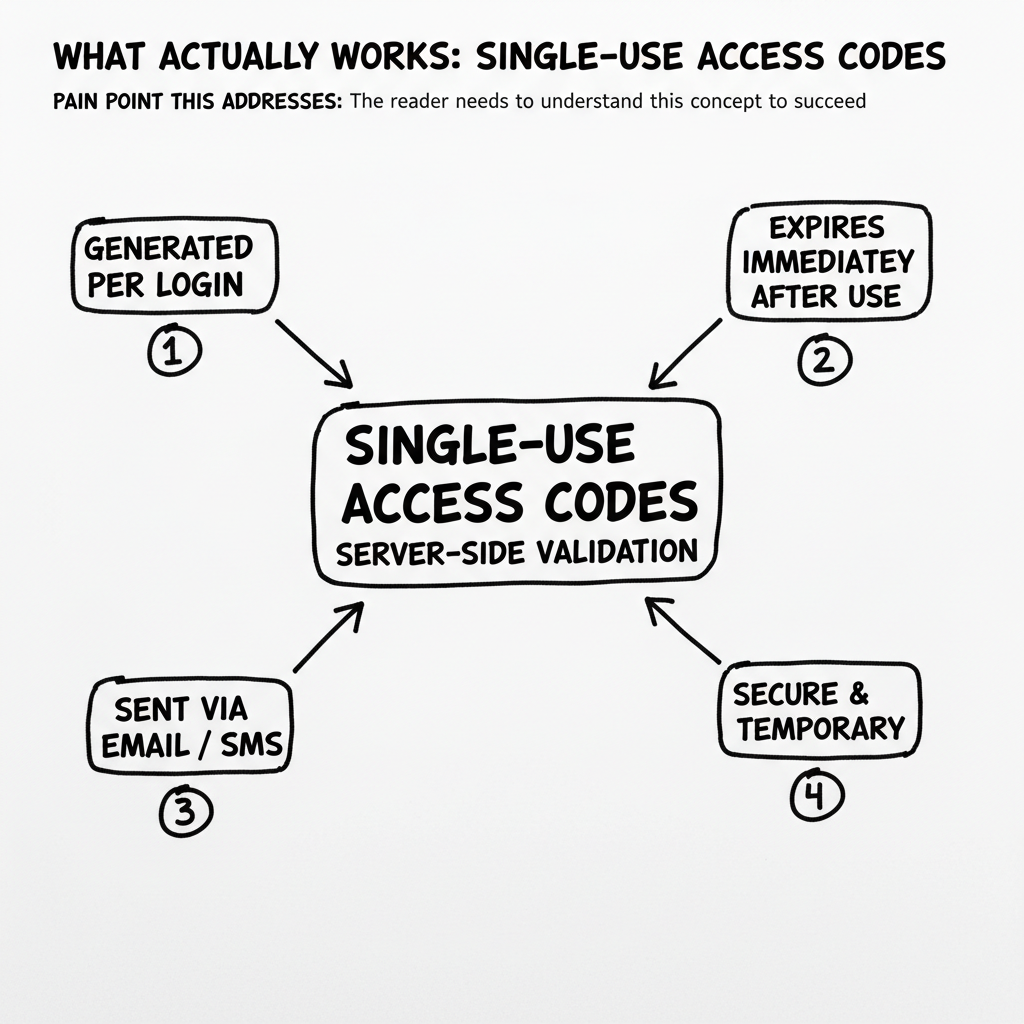
The only access control method that works reliably is single-use access codes with server-side validation.
How it works:
- Customer purchases access to your GPT
- They receive a cryptographically unique access code
- They enter the code into your GPT to unlock functionality
- Your GPT validates the code server-side (via API)
- Code is marked as "used" and can't be used again
- Customer gets full access; code becomes worthless to share
Why this works:
- Each code works exactly once
- Server-side validation prevents circumvention
- Codes can't be extracted or reverse-engineered
- Sharing a used code helps no one
- You can generate unlimited codes on-demand
The economics:
- Infrastructure cost: USD 4-5 per code
- Your price to customers: USD 50-1,000+
- Your margin: 95-99%
- Scalability: Infinite (generate codes as needed)
Technical Implementation: TheGPTShop Access Codes
TheGPTShop provides the complete access code infrastructure creators need.
Setup process (10 minutes):
-
Buy access code packs
- Single code: USD 5
- 10-pack: USD 45 (USD 4.50/code)
- 50-pack: USD 200 (USD 4/code)
-
Embed validation in your GPT
- Add TheGPTShop's validation API as an Action
- Configure your GPT to check codes before providing functionality
- Instructions template provided (copy-paste, no coding)
-
Sell access at your price
- Stripe, Gumroad, manual payment - you choose
- Deliver one code per customer
- Customer enters code, gets validated, gains access
Code validation flow:
Customer receives code → Enters in GPT → GPT calls validation API →
API checks: Valid + Unused? → Yes: Grant access, mark used →
No: Show error message
Example GPT instructions:
When a user first interacts with you, ask for their access code.

Use the validateAccessCode action to check the code.

If valid and unused:
- Welcome them by name
- Provide full functionality
- Mark the code as used

If invalid or already used:
- Politely explain the code doesn't work
- Direct them to [your purchase page]
- Do not provide any functionality

Never bypass this check. Access codes are required for all users.
Security Features That Matter
Effective access control includes several security layers:
1. Cryptographic Code Generation
Access codes aren't sequential or guessable. TheGPTShop uses:
- 16-character alphanumeric codes
- Cryptographically random generation
- No pattern that allows prediction
- ~2.8 trillion possible combinations
Why this matters: Even if someone knows one code, they can't guess the next one.
2. Server-Side Validation
Validation happens on TheGPTShop's servers, not in the GPT itself.
What this prevents:
- Users can't modify the GPT to bypass checks
- Users can't inspect the validation logic
- Users can't create fake "valid" responses
- Validation state is permanent (can't be reset)
3. Single-Use Enforcement
Once a code validates successfully, it's permanently marked as used.
Implementation details:
- Status stored in secure database
- Timestamps track when code was used
- No mechanism to "un-use" a code
- Attempts to reuse return clear error
4. Rate Limiting
Prevents brute-force guessing attacks:
- Maximum validation attempts per IP: 10/hour
- Maximum attempts per code: 5 total
- After limit: temporary lockout
- Legitimate customers never hit these limits
Handling Common Edge Cases
Real-world access control needs to handle exceptions gracefully:
Refunds and Code Resets
Scenario: Customer wants refund, you want to revoke their access
Solution:
- Issue refund through your payment processor
- Contact TheGPTShop support to invalidate the code
- Code becomes unusable (customer confirmed not using the GPT)
- Generate new code if you resell that seat
Multi-User or Team Access
Scenario: Company wants 5 employees to access your GPT
Solution:
- Sell 5 codes (one per user)
- Each employee gets their own code
- Pricing: 5 × USD 100 = USD 500 (or offer team discount)
- Each code validates independently
Lost or Forgotten Codes
Scenario: Customer paid but lost their code email
Solution:
- Verify payment in your records
- Resend the same code (it's still valid if unused)
- If already used, consider customer support exception
Code Expiration
Scenario: You want codes to expire after 1 year
Current limitation: TheGPTShop codes don't auto-expire. Workaround:
- Manually track purchase dates
- Build "subscription check" into your GPT
- After 1 year, GPT asks customer to renew
- Issue new code for renewal
Beyond Access Codes: Additional Protection Layers
Access codes prevent unauthorized access. These tactics prevent unauthorized copying:
1. Embedded Proprietary Knowledge
Strategy: Make your knowledge files the real value, not the instructions
Your GPT's instructions can theoretically be reverse-engineered. Your uploaded knowledge files can't be extracted by users.
What to protect:
- Frameworks and methodologies (in knowledge files)
- Examples and case studies (in knowledge files)
- Reference data and benchmarks (in knowledge files)
- Templates and formats (in knowledge files)
Even if someone copies your instructions, they lack the knowledge base that makes your GPT valuable.
2. Regular Updates and Improvements
Strategy: Continuously improve your GPT so copies become outdated
Update cadence:
- Monthly: New examples or edge case handling
- Quarterly: Major methodology updates
- As needed: Industry changes or new use cases
Customers paying ongoing subscription stay current. One-time code purchasers from copies fall behind.
3. Customer Relationship
Strategy: Build direct relationships that can't be copied
How:
- Email support for paying customers
- Community access (Slack, Discord)
- Monthly office hours or Q&A
- Custom modifications for enterprise customers
The GPT itself might be copyable. Your support and expertise aren't.
Pricing Access Control Into Your Model
Access control has a cost - factor it into pricing:
Cost breakdown:
| Component | Cost | Notes |
|---|---|---|
| Access code infrastructure | USD 4-5/code | TheGPTShop pricing |
| Payment processing | 3% + USD 0.30 | Stripe/Gumroad fees |
| Customer support | ~USD 5/customer | Email support time |
| Total cost per customer | ~USD 10 | Infrastructure + support |
Pricing examples:
| Your Price | Your Cost | Your Margin | Your Profit |
|---|---|---|---|
| USD 50 | USD 10 | 80% | USD 40 |
| USD 100 | USD 10 | 90% | USD 90 |
| USD 500 | USD 10 | 98% | USD 490 |
For specialized GPTs (legal, financial, medical), the USD 10 infrastructure cost is negligible compared to the value delivered.
Implementation Checklist
Before launching with access control:
Technical setup:
- TheGPTShop account created
- Access code pack purchased
- Validation API configured in GPT Actions
- Instructions include access check logic
- Test code validation (valid, invalid, reuse scenarios)
Business setup:
- Payment system configured (Stripe, Gumroad, etc.)
- Code delivery automated (email, Gumroad product delivery)
- Refund policy documented
- Customer support process ready
Testing:
- Purchase flow works end-to-end
- Code validation works in GPT
- Error messages clear for invalid codes
- Used codes properly rejected
- Edge cases handled (refunds, lost codes)
Frequently Asked Questions
Can users bypass access codes by modifying the GPT?
No. Users can't modify the GPT itself - they can only interact with it. The validation logic is embedded in your GPT's instructions and Actions, which users can't change.
What if someone shares a valid, unused code?
Single-use codes prevent this problem. The first person to use the code gets access. The code immediately becomes worthless to share. Even if shared, it won't work for the second person.
How do I handle family or team accounts?
Sell multiple codes. For families, consider a "family pack" at discounted rate (3 codes for USD 250 instead of USD 300). For teams, tiered pricing: 1-5 users, 6-20 users, 21+ users.
Can I use access codes with subscription pricing?
Yes. Generate new codes monthly/annually and have customers validate new codes at renewal. Alternatively, validate once and build subscription expiration logic into your GPT's instructions.
What happens if TheGPTShop goes down?
Validation API failures should have graceful handling in your GPT. Options: (1) Temporary "sorry, validation unavailable" message, (2) Backup validation via webhook to your own server, (3) Manual validation through customer support.
Do I need coding skills to implement access codes?
No. TheGPTShop provides copy-paste instructions and OpenAPI schemas. If you can configure a GPT Action (pointing to an API endpoint), you can implement access codes.
How do I prevent customers from requesting constant refunds?
Clear refund policy (7-14 days), terms of service agreement at purchase, and high enough price point to filter out tire-kickers. Customers paying USD 200+ for specialized value rarely request refunds.
To Marketing Your Custom GPT: From Zero to Paying Customers, see our Marketing Your Custom GPT: From Zero to Paying Customers.
Start Selling With Confidence
Access control is the difference between building a valuable GPT and building a profitable business. Without it, you're hoping customers don't share. With it, you're guaranteeing they can't.
Your next steps:
- This week: Implement TheGPTShop access codes in your GPT
- This month: Validate with 10 paying customers
- Next 90 days: Scale to USD 1,000+ MRR with zero leakage
Ready to enable access control? TheGPTShop provides secure, single-use access codes starting at USD 5 - no coding required, instant setup, cryptographic security.
To learn more about custom gpt monetization, see our Custom GPT Monetization: 6 Revenue Models That Actually Work.
Related Articles
- Custom GPT Monetization: 6 Revenue Models That Actually Work
- Can I Monetize and Charge for My Custom GPT?
- How to Price Your Custom GPT Access
- Do Custom GPT Creators Get Paid?
Sources & Citations:
- TheGPTShop security documentation and best practices
- OpenAI Custom GPT Actions documentation
- SaaS access control and authentication patterns


