Can I Charge for My Custom GPT?
Yes, you can charge for Custom GPTs using access codes, subscriptions, or B2B licensing. Here's how to set up pricing that works.


Can I Charge for My Custom GPT?
You spent 40 hours building a Custom GPT that solves a real problem. You've got 200 users.
And you've made exactly USD 0.
The GPT Store shows "847 conversations this week." Great. However, your bank account shows the same balance as before you started building.
Here's the truth: Yes, you can absolutely charge for your Custom GPT - OpenAI just doesn't make it easy. According to GPT monetization platform data from 2024, Custom GPT creators using access control systems report earning USD 500-5,000 monthly from GPTs that previously generated zero revenue. The gap isn't permission. It's infrastructure.
OpenAI gives you everything to build but nothing to bill.
This matters because the Custom GPT Monetization landscape is evolving fast. Creators who figure out pricing now will own their niches. Meanwhile, those who wait will watch others capture the market they could have dominated.
Let me show you exactly how charging works.
How much does CustomGPT cost?

To Building Custom GPTs: The Complete Technical Guide, see our Building Custom GPTs: The Complete Technical Guide.
Everyone's asking what to charge. Nobody's giving real numbers.
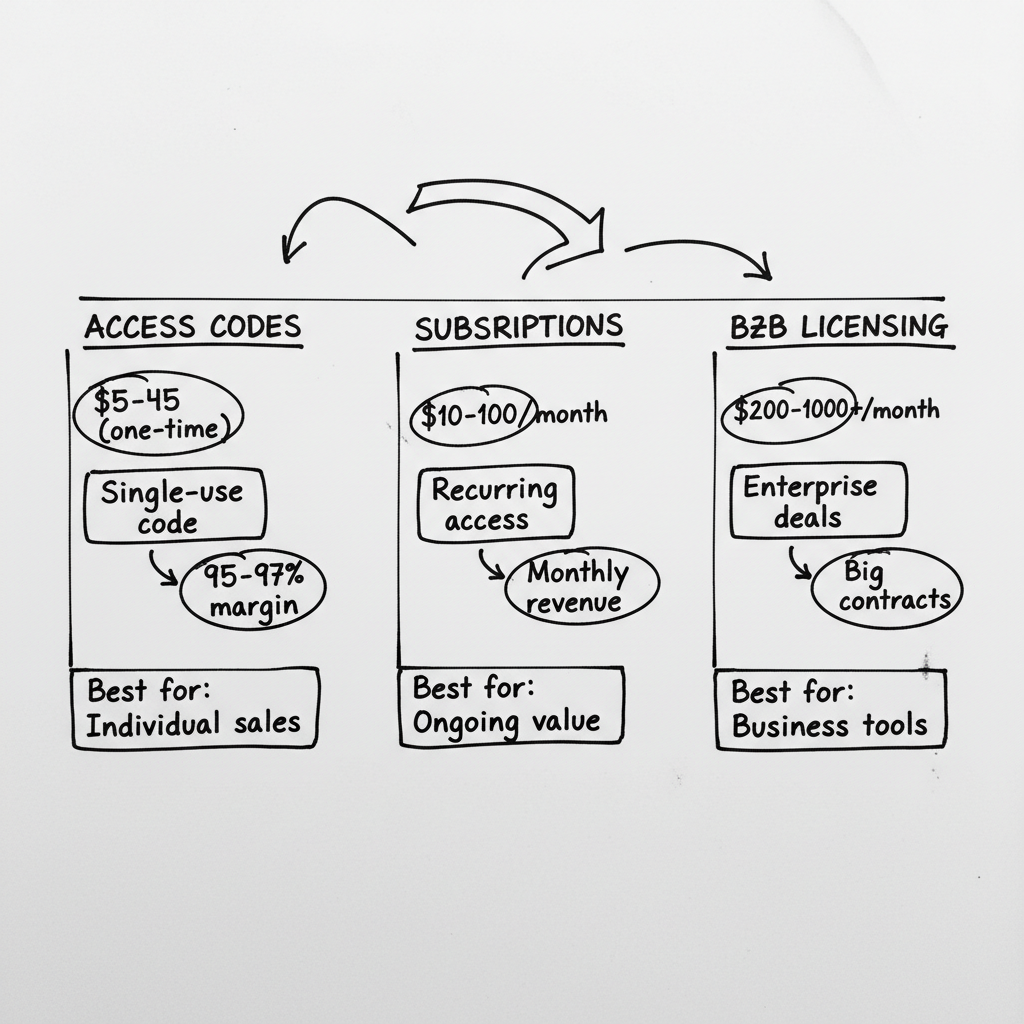
Here's the truth: Custom GPT pricing falls into three tiers that actually work in the market. According to creator revenue reports from platforms like TheGPTShop (2024), successful pricing clusters around access codes, subscriptions, and enterprise licensing. Each tier serves different buyer psychology.
Tier 1: Access Codes (USD 5-45 one-time)
This is where most creators start.
You sell a single-use code that unlocks your GPT. The buyer enters the code, gets lifetime access, done. Consequently, there's no recurring billing and no subscription fatigue.
The math: Buy access codes for USD 4-5 each. Sell GPT access for USD 50-200. That's a 95-97% profit margin on every sale.
For example, a creator selling a resume optimization GPT charges USD 79 per access. Their cost per code is USD 4.50. Therefore, they keep USD 74.50 per customer.
Tier 2: Subscriptions (USD 10-100/month)
For GPTs that deliver ongoing value.
Think weekly content generation, daily market analysis, or continuous coaching. If your GPT saves time repeatedly, subscriptions make sense.
The economics: Monthly pricing works when your GPT replaces a recurring expense or creates recurring value. Similarly, a GPT that writes 4 LinkedIn posts per week delivers USD 200-400/month in time savings. As a result, charging USD 29/month becomes an easy sell.
Tier 3: B2B Licensing (USD 200-1,000+/month)
This is the serious money tier.
When businesses integrate your GPT into their workflows, they'll pay enterprise rates. Specifically, legal review GPTs, technical documentation generators, and customer service automation tools command premium pricing.
Why it works: Businesses calculate ROI differently than individuals. If your GPT saves one employee 10 hours per month, that's USD 500+ in value at typical salary rates. Therefore, charging USD 200/month represents a 60% discount on the value delivered.
To Marketing Your Custom GPT: From Zero to Paying Customers, see our Marketing Your Custom GPT: From Zero to Paying Customers.
Can you sell custom GPTs?

You can build. You can share. But can you actually sell?
Here's the truth: OpenAI doesn't prohibit selling - they just don't provide the infrastructure. According to OpenAI's Terms of Service (2024), creators retain rights to their Custom GPT configurations and can monetize them through external platforms. The platform gap isn't legal. It's technical.
How the Access Control Mechanism Works
Selling a Custom GPT isn't about listing it on a marketplace. It's about controlling who gets in.
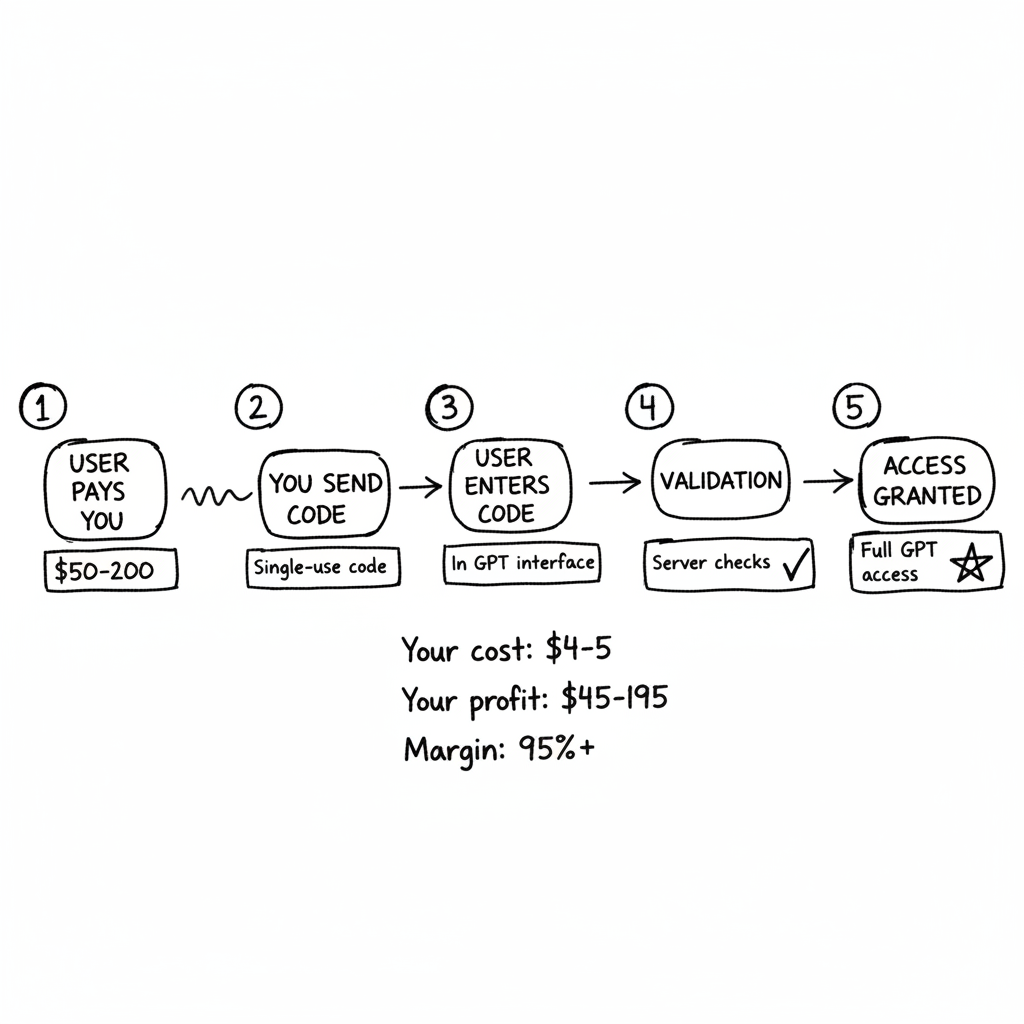
This is how it actually works:
- You create your GPT on ChatGPT (free, uses your Plus subscription)
- You get access codes from a platform like TheGPTShop (USD 4-5 per code)
- You add a code check to your GPT's instructions (no coding required)
- You sell access at whatever price your market supports (USD 50-1,000+)
- Buyer enters code - single-use enforcement prevents sharing abuse
The genius is the single-use part. One code, one user. No more "I'll just share the link with my friends" destroying your revenue.
What About the GPT Store Revenue Sharing?
OpenAI announced a revenue sharing program for the GPT Store. However, the reality is different.
The payouts are based on user engagement, not purchases. Additionally, only US builders are currently eligible. Moreover, the amounts are minimal for most creators. And importantly, you have zero control over pricing.
Revenue sharing is nice. Access control is business.
If you're serious about getting paid as a creator, you need to own the payment relationship.
How much is ChatGPT pricing?

USD 20/month for ChatGPT Plus. That's what your users pay OpenAI.
What do they pay you?
Here's the pricing reality: The GPT economy runs on two separate payment rails - and understanding both is how you maximize profit. According to OpenAI pricing documentation (2025), the user pays for platform access while creators pay nothing to build. This creates the margin opportunity.
The Creator Economics Stack
What users pay OpenAI:
- ChatGPT Plus: USD 20/month (required to use Custom GPTs)
- ChatGPT Pro: USD 200/month (more capacity, same GPT access)
What creators pay OpenAI:
- To create Custom GPTs: USD 0 (included in your Plus subscription)
- For API access (optional): Variable based on usage
What creators can charge users:
- Access to your specific GPT: USD 50-1,000+ (whatever the market bears)
The ROI Calculation That Changes Everything
Let's run real numbers.
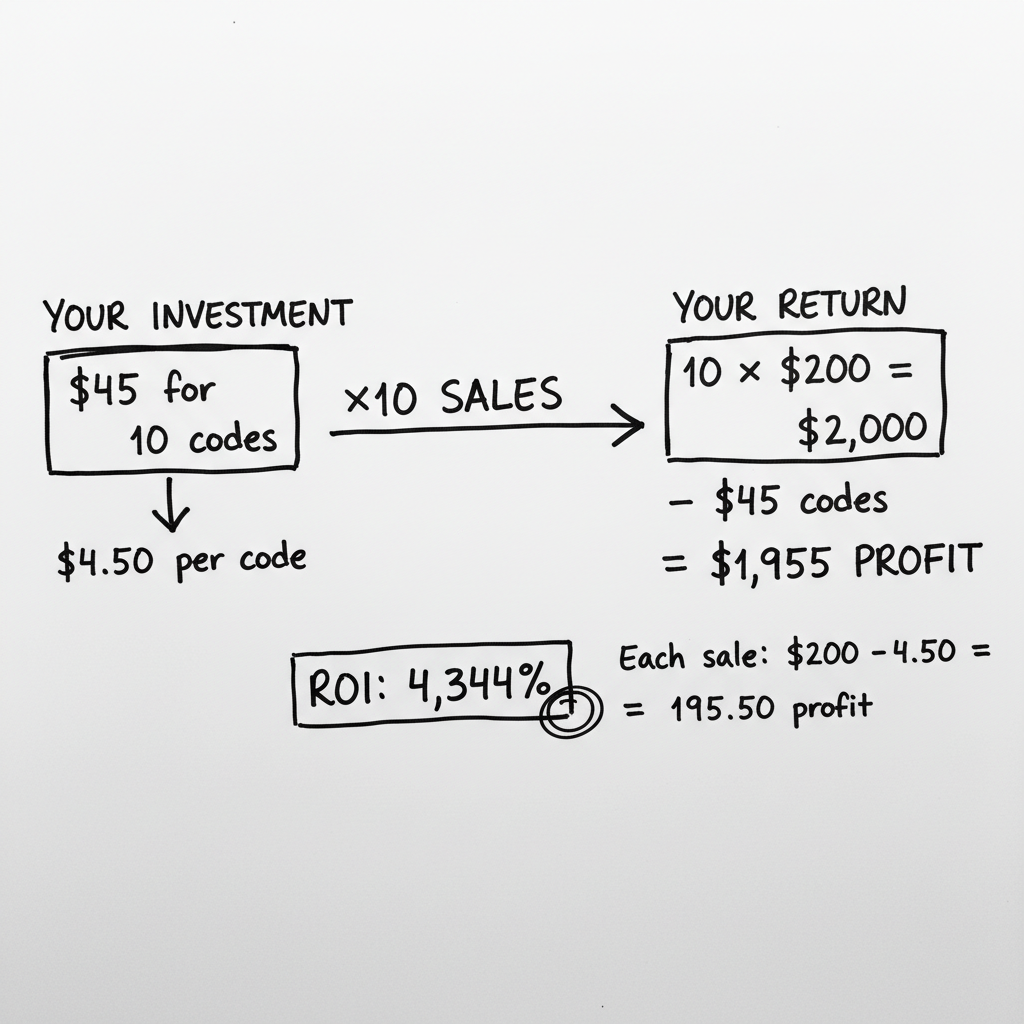
Scenario: You buy TheGPTShop's 10-pack for USD 45 (USD 4.50 per code). Then you sell access to your specialized GPT for USD 200 each.
| Metric | Value |
|---|---|
| Code cost | USD 4.50 |
| Selling price | USD 200 |
| Profit per sale | USD 195.50 |
| Margin | 97.75% |
| 10 sales profit | USD 1,955 |
| ROI on USD 45 | 4,344% |
This isn't theoretical. Creators running niche GPTs in legal, finance, real estate, and technical writing hit these numbers consistently.
What types of Custom GPTs can you charge for?
Not every GPT is worth paying for. But some are worth paying a lot for.
Here's what the market shows: GPTs that solve specific, high-value problems command premium prices. According to successful GPT seller case studies (2024), the highest-earning categories share common traits. They save significant time, require specialized knowledge, or replace expensive professional services.
High-Value GPT Categories
Legal and Compliance (USD 200-500/access):
- Contract review and analysis
- Regulatory compliance checking
- Legal document drafting assistance
Real Estate (USD 100-300/access):
- Property description writers
- Market analysis generators
- Listing optimization tools
Technical Writing (USD 150-400/access):
- API documentation generators
- Technical specification writers
- Code documentation tools
Business Operations (USD 100-250/access):
- SOP creation assistants
- Employee handbook generators
- Process documentation tools
The USD 50-100 Sweet Spot
For most individual creators, the USD 50-100 range hits the sweet spot.
It's low enough that the purchase is impulse-level for professionals. Meanwhile, it's high enough that you're building real income. And with 95%+ margins, you keep almost everything.
How do I actually set up charging for my GPT?
Theory is nice. Implementation is better.
This is how you actually start monetizing today. The setup process takes about 30 minutes if you already have a working GPT. No coding. No complex integrations. Just copy-paste instructions.
Step 1: Validate Your GPT Has Value
Before charging, confirm demand exists:
- Have at least 50+ conversations in the GPT Store
- Receive positive feedback or requests for more
- Solve a problem people currently pay to solve elsewhere
Step 2: Get Access Codes
Option A - TheGPTShop (recommended for simplicity):
- Single code: USD 5
- 10-pack: USD 45 (10% discount)
- 50-pack: USD 200 (20% discount)
Each code is cryptographically unique, single-use, and valid for one year.
Step 3: Add Code Validation to Your GPT
In your GPT's instructions, add a check that requires users to enter a valid code before accessing the main functionality.
The exact implementation varies by platform, but the logic is straightforward:
- User opens GPT
- GPT asks for access code
- User enters code
- Code validates against single-use system
- If valid, full access. If invalid, access denied.
Step 4: Set Your Price and Sell
Where to sell:
- Your own website (keep 100% minus code costs)
- Gumroad/Lemon Squeezy (marketplace exposure, ~5-10% fees)
- Direct outreach to target customers
The beauty of access codes: you're not locked to any platform. Sell anywhere. Deliver via email. The code works regardless of where the transaction happened.
Common mistakes when charging for Custom GPTs
To learn more about custom gpt monetization, see our Custom GPT Monetization: 6 Revenue Models That Actually Work.
Most creators who try monetizing fail. Not because the model doesn't work - because they make avoidable errors.
Here's what trips people up. According to analysis of failed GPT monetization attempts (2024), three patterns appear consistently: pricing too low, skipping access control, and targeting too broad.
Mistake 1: Pricing Too Low
You built something valuable. Don't charge USD 10 for it.
The psychology: When you charge USD 10, buyers expect USD 10 of value. However, when you charge USD 200, they expect - and find - USD 200 of value. Same GPT, different perception.
The fix: Price based on the problem you solve, not the time you spent building.
Mistake 2: Giving It Away First
"I'll give it away free to build buzz, then charge later."
This approach never works. You train your audience that your GPT is free. Consequently, switching to paid creates resentment, not revenue.
The fix: Charge from day one. Even USD 25 establishes that your work has value.
Mistake 3: No Access Control
Sharing a public GPT link and asking for payment on the honor system creates predictable problems.
What happens: One person pays. They share the link. Fifty people use it free. You made one sale instead of fifty.
The fix: Single-use access codes. One code, one user, no exceptions.
Frequently Asked Questions
Is it legal to charge for Custom GPTs?
Here's the truth: Yes, charging for Custom GPTs is completely legal. According to OpenAI's Terms of Service (2024), creators retain rights to their GPT configurations and associated intellectual property. OpenAI doesn't take a cut of your external sales and doesn't restrict your pricing.
What You Own
You own your instructions, your uploaded files, and your configuration choices.
What You Don't Own
You don't own the underlying GPT-4 model or OpenAI's infrastructure.
Key point: You're selling access to your specialized configuration, not the AI itself. This is the same model as selling Notion templates or Airtable bases.
How much can I realistically make from a Custom GPT?
Here's what the market shows: Realistic monthly revenue ranges from USD 500 to USD 5,000+ for active GPT sellers. According to creator reports from GPT monetization platforms (2024), income depends heavily on niche specificity and audience size.
Revenue Benchmarks by Creator Type
| Creator Level | Monthly Sales | Revenue Range |
|---|---|---|
| Starter | 5-10 | USD 250-1,000 |
| Established | 20-50 | USD 1,000-5,000 |
| Authority | 100+ | USD 5,000-25,000 |
What Drives Higher Revenue
- Niche expertise: Specialized GPTs command premium prices
- Existing audience: Email lists and social following accelerate sales
- Clear ROI: GPTs that save measurable time/money sell easier
Do I need coding skills to charge for my GPT?
The answer is no - zero coding required. According to TheGPTShop's implementation documentation (2024), the entire setup uses copy-paste instructions and email-delivered access codes.
What You Actually Do
- Buy access codes (one click purchase)
- Add validation prompt to GPT instructions (copy-paste)
- Sell access anywhere you want
- Send code to buyer (email delivery)
Technical Complexity Level
Creating the GPT itself is the hardest part. Monetizing it is easier than setting up a Stripe account.
Can I charge for a GPT that uses my company's data?
Here's the consideration: Yes, but with important caveats. According to enterprise AI deployment guidelines (2024), companies can monetize GPTs built on proprietary data as long as the data sharing complies with internal policies.
Before You Charge
- Verify you have rights to monetize the underlying data
- Check if company policy allows external commercialization
- Consider privacy implications for any customer data
- Review any NDA or IP agreements that might apply
Safe approach: Use your personal expertise and publicly available knowledge to eliminate ownership questions entirely.
What happens if someone shares my access code?
Here's why this isn't a problem: Single-use codes can only be used once. According to TheGPTShop's access control documentation (2024), each code is validated server-side and marked as used after first successful validation.
How It Works
- Buyer enters code
- System validates code (instant, server-side check)
- Code marked as "used" permanently
- Same code never works again
If Someone Tries Sharing
They share a used code. The recipient tries it. It fails. As a result, they realize they need to buy their own access.
The psychology shift: When sharing doesn't work, word spreads that buying is required. Consequently, this actually increases sales.
Should I use the GPT Store revenue sharing or charge myself?
Here's the comparison: GPT Store revenue sharing is passive but minimal. Direct charging is active but profitable. According to early GPT Store payout reports (2024), creators with thousands of users report payouts in the tens of dollars monthly.
Meanwhile, direct sales of 10 access codes at USD 100 each equals USD 1,000.
GPT Store Revenue Sharing
- Passive income (no selling required)
- Minimal payouts for most creators
- US-only currently
- You have zero pricing control
Direct Charging with Access Codes
- Active selling required
- Significant income potential
- Works globally
- You set all pricing
The verdict: Use both. Keep your GPT in the Store for visibility. Sell premium access for revenue.
Start Charging Today
You've built something valuable. Now it's time to get paid for it.
The infrastructure exists. The pricing models work. The margins are exceptional.
The only question is whether you'll act on it or keep watching your GPT Store analytics show conversations you're not earning from.
Next steps:
- Review the complete Custom GPT Monetization guide
- Choose your pricing tier (start with access codes at USD 50-100)
- Get your first batch of codes
- Add validation to your GPT instructions
- Make your first sale this week
Creators who monetize Custom GPTs now will own their markets. The window is open. Walk through it.
Last Updated: December 2025


