Custom GPT Monetization: 6 Revenue Models That Actually Work
Six proven revenue models for Custom GPT creators: access codes, service delivery, subscriptions, marketplace positioning, B2B licensing, and SaaS packaging. Real examples with pricing.


Last updated: December 28, 2025
Custom GPT creators are generating USD 500-USD 10,000+ monthly using six distinct revenue models. The difference between creators earning nothing and those building sustainable income comes down to choosing the right monetization approach for their specific GPT and target market.
OpenAI's Custom GPT platform has exploded since its launch, but monetization remains a challenge because OpenAI doesn't provide native payment processing. That's actually an opportunity: creators who solve the access control problem can charge premium prices while competitors give away their work for free.
This guide breaks down each revenue model with real pricing benchmarks, implementation requirements, and the specific scenarios where each model performs best. By the end, you'll know exactly which approach fits your Custom GPT.
Model 1: Access Code Infrastructure (95-99% Creator Margins)
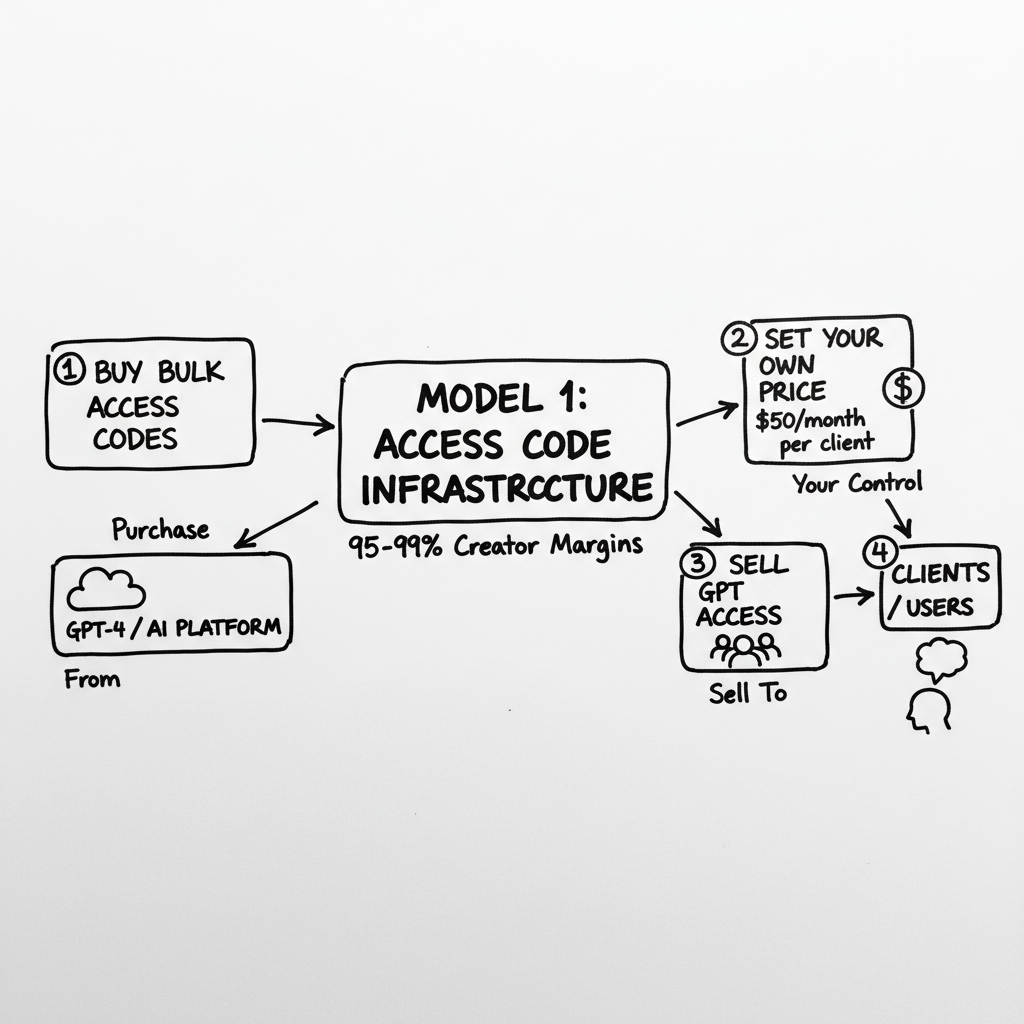
The simplest entry point for monetization. You buy access codes as infrastructure, then sell GPT access to your clients at your own price point.
How it works:
- Build your Custom GPT with proprietary instructions and knowledge
- Buy access codes from TheGPTShop (your infrastructure cost)
- Sell GPT access to your clients at your own price (USD 50-USD 1,000+)
- Your client enters the code to unlock the GPT - you keep the margin
The economics:
| Your Cost (TheGPTShop) | Your Price to Clients | Your Margin |
|---|---|---|
| USD 5/code | USD 100 | 95% (USD 95 profit) |
| USD 5/code | USD 200 | 97.5% (USD 195 profit) |
| USD 5/code | USD 500 | 99% (USD 495 profit) |
Volume discounts on infrastructure:
- Single code: USD 5
- 10-pack: USD 45 (USD 4.50/code)
- 50-pack: USD 200 (USD 4/code)
Best for:
- Solo creators who want simple, instant monetization
- Specialized knowledge GPTs (legal, medical, financial) commanding premium prices
- Quick validation before investing in complex subscription systems
Revenue potential: A legal research GPT creator buys 10 codes for USD 45, sells access at USD 200 each = USD 1,955 profit (4,344% ROI)
The access code model works because the infrastructure cost is fixed and tiny compared to what specialized GPTs command. A financial analysis GPT solving a USD 10,000 problem can easily charge USD 500 per access - your cost is still just USD 5.
To learn more about getting started with monetization, see our Complete Revenue Guide. For detailed guidance on access code monetization, read Can I Monetize and Charge for My Custom GPT?
Model 2: GPT-Powered Service Delivery (USD 500-USD 5,000 per client)

Use your Custom GPT as the backend for delivering high-value services faster and cheaper than competitors.
According to Tyler Koerner, host of The Koerner Office podcast, this is where the real leverage happens: "Yesterday, you needed a virtual assistant, a data scraper, a copywriter, an intern, and maybe a research assistant. Today, you just tell this thing what you want it to do and watch it work."
Real-world implementation:
Koerner's website-building service uses GPT Agents to:
- Find 20 plumbers in Nashville without websites
- Grab their contact information automatically
- Write personalized sales emails
- Export everything to a CSV with follow-up templates
"The same principle exists with building websites for business owners," Koerner explains. "We want to find business owners that already have websites because those people value having an online presence."
Pricing benchmarks:
- Website development packages: USD 500-USD 2,000
- Marketing automation setup: USD 1,000-USD 3,000
- Competitive research reports: USD 500-USD 1,500
- Custom GPT development for clients: USD 2,000-USD 5,000
Best for:
- Agencies and consultants
- Service businesses looking to scale
- Creators with specific industry expertise
Revenue potential: 10 clients at USD 1,000 average = USD 10,000/month with significant margin improvement
The service model works because you're selling outcomes, not tools. Clients pay for the result (a website, a marketing campaign, a research report), and your GPT makes delivery faster and more profitable. Learn more about how Custom GPT creators get paid through service delivery models.
Model 3: Subscription Tiers (USD 10-USD 100/month)
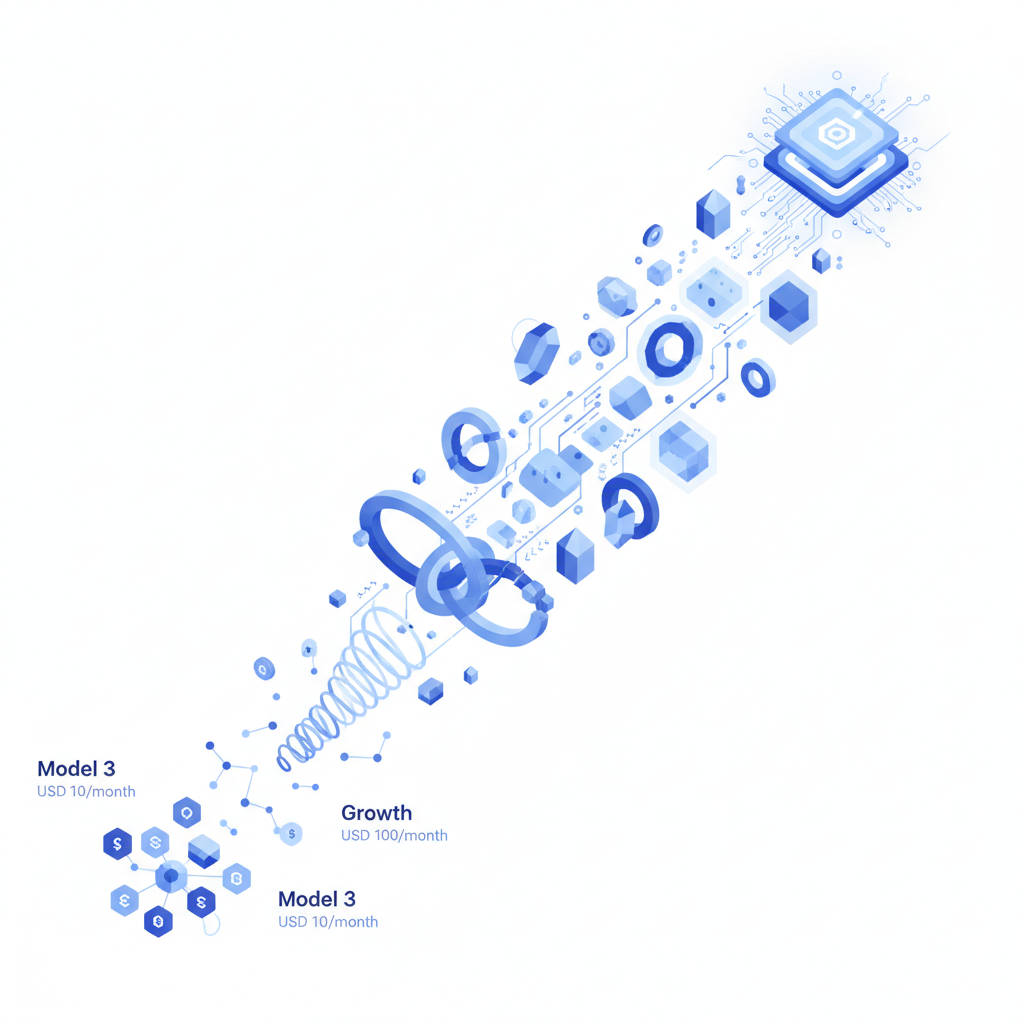
Create tiered access levels based on usage limits, features, or priority support.
Tier structure example:
| Tier | Price | Features |
|---|---|---|
| Basic | USD 10/month | 10 queries/day, email support |
| Pro | USD 35/month | Unlimited queries, priority support, API access |
| Enterprise | USD 100/month | White-label options, dedicated support, custom integrations |
Implementation requirements:
- Access control system (access codes or API keys)
- Usage tracking (query counts, feature flags)
- Support infrastructure (email at minimum, chat for higher tiers)
Best for:
- GPTs with repeat use cases
- Business tools (CRM, analytics, content generation)
- Educational platforms
Revenue potential: 100 subscribers on average USD 25/month tier = USD 2,500 MRR
Subscriptions work because they create recurring revenue and incentivize you to improve the GPT over time. Each improvement increases retention and reduces churn. Explore our subscription vs one-time pricing comparison to determine which model fits your GPT best.
Model 4: GPT Marketplace Positioning
To Marketing Your Custom GPT: From Zero to Paying Customers, see our Marketing Your Custom GPT: From Zero to Paying Customers.
To Marketing Your Custom GPT: From Zero to Paying Customers, see our Marketing Your Custom GPT: From Zero to Paying Customers.
List your Custom GPT on marketplaces and directories to attract organic traffic from users actively searching for specialized solutions.
Where to list:
- OpenAI's GPT Store (native, but limited discovery)
- TheGPTShop (monetization-focused marketplace)
- Product Hunt (for launches)
- Industry-specific directories
Optimization strategies:
-
Title optimization: Include the specific problem you solve
- Bad: "Business Helper GPT"
- Good: "Legal Research GPT for Family Law Attorneys"
-
Description keywords: Match search intent
- Focus on outcomes, not features
- Include industry-specific terminology
-
Reviews and ratings: Social proof drives conversions
- Ask satisfied users for reviews
- Respond to feedback publicly
According to marketplace data, specialized GPTs in legal, medical, and business consulting niches see 3-5x higher conversion rates than general-purpose GPTs.
Best for:
- Creators with unique, niche expertise
- GPTs solving expensive problems
- Long-term organic traffic building
Revenue potential: Marketplace positioning is a traffic multiplier. Combined with access code sales, it can 2-3x your customer acquisition without additional ad spend. For details on OpenAI GPT Store revenue sharing, including how creator payments work, read our complete breakdown.
Model 5: B2B Licensing (USD 200-USD 1,000+/month per business)
License your Custom GPT to agencies, teams, or enterprises managing multiple clients.
Value proposition: "Manage client GPT access at scale without developer overhead"
Licensing tiers:
| License | Price | Includes |
|---|---|---|
| Team | USD 200/month | Up to 10 users, basic customization |
| Agency | USD 500/month | Up to 50 users, white-label branding |
| Enterprise | USD 1,000+/month | Unlimited users, API access, priority support, custom development |
Implementation requirements:
- Multi-user access management
- Usage analytics per organization
- Customization options (branding, prompts)
- SLA and support infrastructure
Best for:
- GPTs used by teams (content generation, research, analytics)
- Solutions for agencies managing multiple clients
- Enterprise workflow automation
Revenue potential: 10 agency licenses at USD 500/month = USD 5,000 MRR with lower support overhead per dollar than consumer sales
B2B licensing works because businesses have budgets and urgent problems. They pay for reliability, support, and time saved. The sales cycle is longer, but customer lifetime value is significantly higher. When setting B2B pricing, review our guide to pricing Custom GPT access to maximize value capture.
Model 6: SaaS Product Packaging (USD 20-USD 500/month)
To Building Custom GPTs: The Complete Technical Guide, see our Building Custom GPTs: The Complete Technical Guide.
To Building Custom GPTs: The Complete Technical Guide, see our Building Custom GPTs: The Complete Technical Guide.
Package your Custom GPT as a standalone software product with dedicated UI, billing, and customer support.
What this looks like:
Instead of selling access to a GPT, you build a wrapper application that:
- Provides a custom interface
- Handles user authentication
- Manages billing and subscriptions
- Adds features beyond the GPT (analytics, team management, integrations)
Example: A dental practice management GPT becomes "DentistAI" - a complete SaaS product with:
- Custom dashboard for appointment scheduling
- Patient communication templates
- Insurance claim assistance
- Practice analytics
Pricing: USD 150/month per practice
Revenue potential: 80 dental practices at USD 150/month = USD 12,000 MRR
SaaS packaging works because you're no longer selling a tool - you're selling a solution. The GPT becomes infrastructure, not the product. This commands premium pricing and creates defensible competitive positioning.
Trade-offs:
- Requires technical development (web app, authentication, billing)
- Higher customer support expectations
- Longer development timeline before revenue
Best for:
- Creators with technical skills or development resources
- GPTs solving high-value industry problems
- Long-term business building vs. quick monetization
Choosing Your Monetization Model
Start with access codes if:
- You're validating demand
- You have limited technical resources
- Your GPT is specialized but niche
Move to subscriptions if:
- Users need repeat access
- You can differentiate tier features
- You want predictable recurring revenue
Add service delivery if:
- You have industry expertise
- Clients need outcomes, not tools
- You can deliver at scale with GPT assistance
Consider B2B licensing if:
- Teams or agencies are your natural customers
- Usage per organization is high
- You can support business requirements
Build SaaS if:
- You're solving a big enough problem
- You have development resources
- You're building for 3-5 year timelines
Hybrid Approaches: Maximizing Revenue
The highest-earning creators combine multiple models:
Example revenue stack:
- Access codes (USD 1,000/month) - Entry point for individual users
- Service delivery (USD 5,000/month) - High-ticket clients using your GPT
- B2B licensing (USD 3,000/month) - Agencies licensing for their teams
- Total: USD 9,000/month from one Custom GPT with diversified revenue
The hybrid approach works because different customer segments have different willingness to pay. Individuals might pay USD 20/month. Agencies pay USD 500/month. Enterprise pays USD 1,000+/month. Same GPT, different packaging.
Implementation Checklist
Before choosing your model, verify:
- Problem validation: People are actively searching for solutions to the problem your GPT solves
- Willingness to pay: You've talked to 10+ potential customers about pricing
- Competitive landscape: You understand how alternatives are priced
- Delivery capability: You can support the customer experience your model requires
Common mistakes to avoid:
- Starting with SaaS before validation - Build the simplest monetization first
- Underpricing - Business GPTs should start at USD 20/month minimum
- No differentiation - Generic GPTs compete on price and lose
- Ignoring support costs - Factor in customer success before choosing your model
To learn more about custom gpt monetization, see our Custom GPT Monetization: 6 Revenue Models That Actually Work.
FAQ: Custom GPT Monetization Models
Which model makes the most money?
SaaS packaging has the highest revenue ceiling but requires the most investment. For quick validation, access codes generate revenue within days. For sustainable business, subscriptions provide predictable recurring revenue. Most successful creators combine 2-3 models.
Can I use multiple models at once?
Yes, and you should. Start with access codes to validate demand, add subscription tiers as usage patterns emerge, and layer in B2B licensing when agencies express interest. Each model captures a different customer segment.
How do I set prices?
Calculate the customer's current cost (time, money, or opportunity cost) to solve the problem. Price at 10-20% of that value. A GPT saving 8 hours of research (worth USD 400) can reasonably charge USD 40-80/month.
What about OpenAI's revenue sharing?
OpenAI's GPT Store revenue sharing is speculative and limited. Most successful creators monetize independently through access codes, subscriptions, or services rather than waiting for platform revenue.
Do I need coding skills?
No coding required for access codes or service delivery. Subscriptions require basic automation. SaaS packaging typically requires development resources or no-code tools.
Start Monetizing Today
The Custom GPT monetization landscape is early. Creators moving now have first-mover advantage while the market matures.
Your next steps:
- This week: Choose your primary monetization model based on your GPT and target market
- This month: Set up access control and process your first paid customers
- This quarter: Add a second revenue stream to diversify income
The creators earning USD 5,000-USD 10,000/month didn't start with complex systems. They started with access codes, validated demand, and expanded from there.
Ready to monetize? TheGPTShop enables Custom GPT creators to sell access in 10 minutes - no coding, instant delivery, secure access control.
Sources & Citations:
- Tyler Koerner, "6 Ways to Make Money With the New GPT Agent," The Koerner Office Podcast, Episode #198
- OpenAI Custom GPT marketplace data (2024-2025)
- SaaS pricing research benchmarks


