OpenAI GPT Store vs Direct Monetization: Why Most Creators Choose Direct Sales
Compare GPT Store revenue sharing vs direct monetization. Understand why most successful Custom GPT creators bypass the store and build their own distribution for higher, more reliable revenue.


OpenAI GPT Store vs Direct Monetization: Why Most Creators Choose Direct Sales
Quick Answer: While the GPT Store offers a built-in audience and passive revenue sharing, its model is unreliable—most creators earn nothing. Successful Custom GPT creators bypass the store and monetize directly through access codes, subscriptions, or services, capturing 95%+ of revenue instead of an unknown share. This guide compares both approaches so you can decide which fits your goals.
How the GPT Store Revenue Program Works
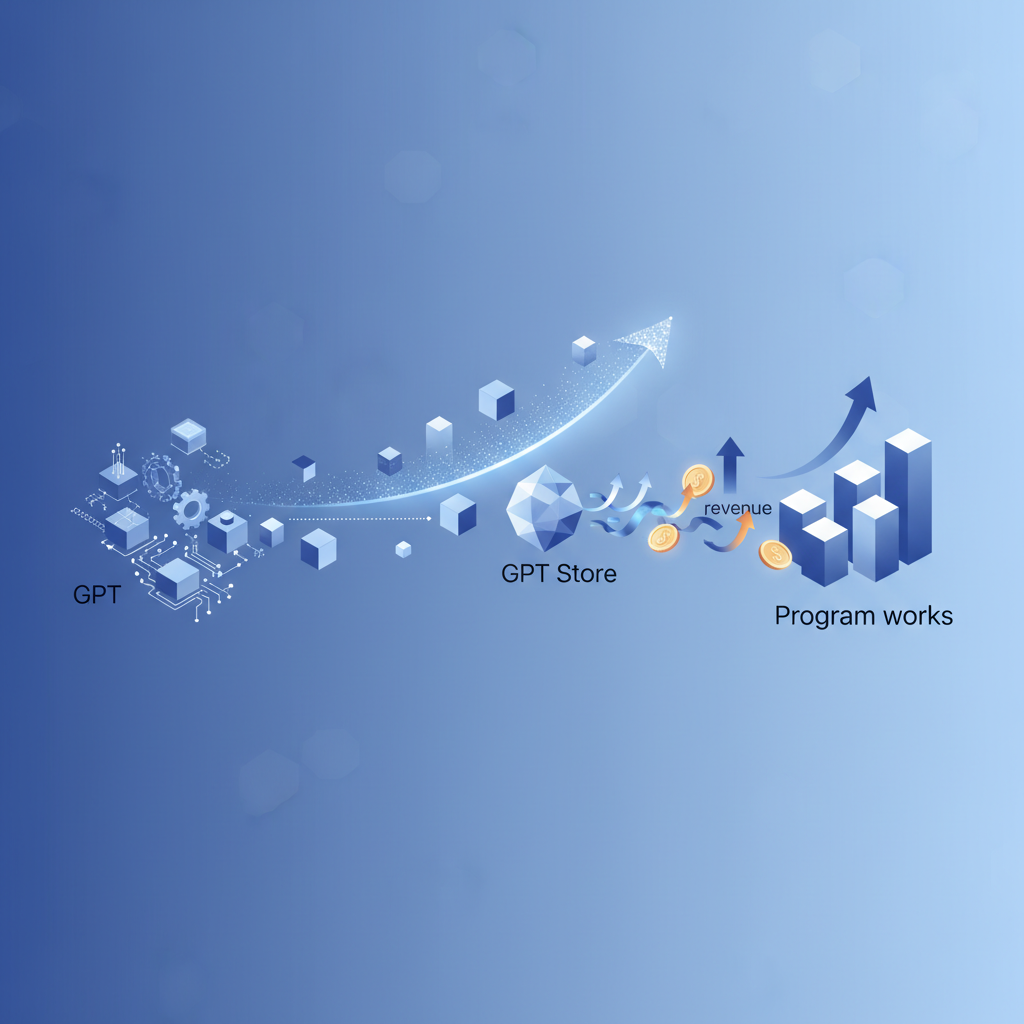

OpenAI announced the GPT Store revenue sharing program in early 2024, but the details remain frustratingly vague.
What we know:
- Payouts are based on "user engagement" with your GPT
- Creators must be in an eligible country (primarily US builders initially)
- Your GPT must meet a minimum usage threshold
- Payments come quarterly
What remains unclear:
- The exact formula for calculating payouts
- How "engagement" is measured beyond conversation count
- The precise revenue pool and how it's divided
- Whether the program will continue or expand
This opacity creates a fundamental problem: you can't optimize for something you can't measure. Creators building GPTs specifically for the store are essentially gambling on an unknown algorithm.
The Eligibility Requirements


Not everyone can participate in the revenue sharing program. Here's what you need:
Location requirements:
- Currently limited to US-based creators (expansion announced but timeline unclear)
- Must have a verified OpenAI account with valid payment information
GPT requirements:
- Must be published publicly in the GPT Store
- Must maintain at least 25 conversations per week
- Must comply with OpenAI's usage policies
- Must not violate content guidelines
The 25-conversation threshold: This is where most creators fail. Getting 25 different users to have conversations with your GPT every single week requires:
- Active marketing outside the platform
- A GPT that solves a recurring problem
- Some form of distribution channel (social media, email list, website)
Without external traffic, store discovery alone rarely generates 25+ weekly conversations.
What Creators Actually Earn


Reported earnings vary wildly, and OpenAI doesn't publish aggregate data. Here's what we know from creator reports:
Top earners (top 1% of GPTs):
- Reports of USD 500-USD 5,000 per quarter
- These are GPTs with tens of thousands of users
- Often built by creators with large existing audiences
Mid-tier earners:
- USD 50-USD 500 per quarter
- Require consistent traffic and engagement
- Still represents a small minority of creators
Most creators:
- USD 0 (don't meet the 25-conversation minimum)
- Or small payouts that don't cover the time invested
- No clear path to growing earnings
The math problem: If a top GPT with 50,000 monthly users earns USD 1,000/quarter, that's roughly USD 0.02 per user per month. Compare that to charging users directly at USD 50-USD 500 per access, and the revenue sharing model looks significantly less attractive.
Why the GPT Store Model Struggles
The GPT Store revenue sharing has structural problems that limit creator earnings:
Problem 1: Discovery is broken
The store has thousands of GPTs competing for attention. Without strong SEO within the store or external marketing, your GPT is invisible. OpenAI's algorithm for featuring GPTs isn't transparent, so gaming discovery is nearly impossible.
Problem 2: No pricing control
You can't set your own price. OpenAI decides how much of the revenue pool goes to each creator based on their internal metrics. This means you have zero leverage to capture more value from a better GPT.
Problem 3: Platform dependency
Your income depends entirely on OpenAI's decisions. They can change the revenue formula, reduce the pool, or end the program entirely. Creators have no recourse.
Problem 4: Cannibalization
Every Custom GPT competes with every other Custom GPT for the same revenue pool. As more creators join, the pool gets divided into smaller slices unless it grows proportionally.
Alternative: Direct Monetization
Smart creators skip the GPT Store revenue program entirely and monetize their GPTs directly.
The direct monetization model:
- Build your Custom GPT (same process as store GPTs)
- Keep it private or unlisted (not in the public store)
- Sell access through your own channels
- Use access codes or gated links to control who can use it
Advantages over store revenue sharing:
- You set the price (USD 50, USD 200, USD 500+)
- You keep 95%+ of revenue (vs unknown share of pool)
- You control your customer relationship
- You're not dependent on OpenAI's algorithm
- You can bundle with other offerings (courses, consulting, community)
Example comparison:
- GPT Store: 1,000 users, maybe USD 50-100 quarterly (if you're lucky)
- Direct: 50 users at USD 100 each = USD 5,000 (immediate, guaranteed)
The math overwhelmingly favors direct monetization for any GPT with real business value.
How Access Codes Enable Direct Monetization
To Building Custom GPTs: The Complete Technical Guide, see our Building Custom GPTs: The Complete Technical Guide.
To Building Custom GPTs: The Complete Technical Guide, see our Building Custom GPTs: The Complete Technical Guide.
TheGPTShop provides the infrastructure for direct GPT monetization:
How it works:
- You buy access code packs (USD 5 per code, volume discounts available)
- Your GPT checks for valid access codes
- You sell access to customers at your price (USD 50-USD 1,000+)
- Customers enter their code to unlock your GPT
- You keep the difference (95%+ margins typical)
Why this works better than revenue sharing:
- Immediate revenue (not quarterly payouts)
- Known earnings per sale (not algorithmic mystery)
- Your price, your customers, your business
- No minimum threshold to start earning
- No competition for a shared revenue pool
Creator economics:
- Buy 10-pack of codes: USD 45 (USD 4.50 each)
- Sell GPT access at USD 150 each
- Revenue per sale: USD 145.50 (97% margin)
- 10 sales = USD 1,455 profit
To Marketing Your Custom GPT: From Zero to Paying Customers, see our Marketing Your Custom GPT: From Zero to Paying Customers.
Compare that to hoping for a share of an undisclosed revenue pool based on an unknown formula.
When the GPT Store Still Makes Sense
To Marketing Your Custom GPT: From Zero to Paying Customers, see our Marketing Your Custom GPT: From Zero to Paying Customers.
The store isn't entirely useless. It works for specific strategies:
Discovery and validation: Publish a free or basic version in the store to test demand. If users love it, create a premium version you monetize directly.
Lead generation: Use store presence to attract potential customers. Offer basic functionality for free, then upsell premium access through direct channels.
Portfolio building: Having GPTs in the store demonstrates expertise. Use them as proof of concept when selling consulting or custom GPT development services.
Passive experiment: If you've already built a GPT, there's no harm in listing it. Just don't build your business model around the uncertain revenue sharing.
Building a Sustainable GPT Business
Instead of chasing store revenue, build a real GPT business:
Step 1: Solve an expensive problem
GPTs that save businesses money or time command premium prices. Focus on problems where the solution is worth USD 500+ to your customer.
Step 2: Embed your methodology
Your unique approach, framework, or expertise makes your GPT irreplaceable. Generic GPTs compete on discovery. Methodology-based GPTs compete on value.
Step 3: Control your distribution
Build an email list, social media presence, or community. Don't depend on store discovery or algorithm changes.
Step 4: Price for value
Charge USD 100-USD 500+ for business GPTs. The customers who pay premium prices are better customers anyway (fewer support requests, more referrals, longer retention).
Step 5: Use proper infrastructure
Access codes give you control without building complex payment systems. Simple, secure, and you keep your margins.
Frequently Asked Questions
How much does the average GPT Store creator earn?
Most creators earn USD 0 because they don't meet the 25-conversation weekly minimum. Among those who qualify, median earnings appear to be under USD 100 per quarter based on community reports. Only a tiny percentage of creators (likely under 1%) earn meaningful income from the program.
Is the GPT Store revenue sharing program ending?
OpenAI hasn't announced an end date, but the program's future is uncertain. The company has provided little transparency about payouts or program sustainability. Building your business entirely around store revenue is risky given this uncertainty.
Can I use both the store and direct monetization?
Yes. Many creators publish a free or basic version in the store for discovery while selling a premium version directly. The store version serves as a lead magnet; the direct version generates real revenue.
Why doesn't OpenAI disclose the revenue formula?
OpenAI likely keeps the formula private to prevent gaming and maintain flexibility. Unfortunately, this means creators can't optimize their GPTs for earnings, making the program feel more like a lottery than a business model.
What percentage of GPT Store revenue goes to creators?
OpenAI hasn't disclosed the total revenue pool or percentage allocation. Without this information, it's impossible to evaluate whether the program offers fair compensation for creator contributions.
How do I qualify for GPT Store revenue sharing?
You need: (1) US-based verified account, (2) public GPT in the store, (3) 25+ conversations per week sustained over time, (4) compliance with all OpenAI policies. Meeting these requirements doesn't guarantee meaningful payouts.
Is direct monetization harder than using the store?
Direct monetization requires you to market your GPT and acquire customers yourself. But you control pricing, keep higher margins, and build a real business asset. With infrastructure like TheGPTShop access codes, the technical complexity is minimal.
To learn more about custom gpt monetization, see our Custom GPT Monetization: 6 Revenue Models That Actually Work.
To learn more about custom gpt monetization, see our Custom GPT Monetization: 6 Revenue Models That Actually Work.
Take Control of Your GPT Revenue
The GPT Store revenue sharing program sounds attractive until you understand the math. Unknown formulas, tiny payouts, and platform dependency make it a poor foundation for a business.
Successful Custom GPT creators take a different approach:
- Build GPTs that solve expensive problems
- Price based on value delivered
- Control their own distribution and customer relationships
- Use simple infrastructure (access codes) to manage access
- Keep 95%+ margins instead of hoping for algorithm favor
Your action plan:
- If you have a store GPT, consider a premium direct version
- Calculate what direct pricing would earn you vs. store revenue
- Set up access code infrastructure at TheGPTShop
- Start selling directly while using the store for discovery
The creators building real GPT businesses aren't waiting for quarterly store payouts. They're selling directly, keeping their margins, and controlling their revenue.
Related Articles:


